
Moving from Chatbots to Autonomous Agents with AI Development Services
Chatbots Got Us Started, But It’s Time to Move On
Remember when chatbots were the big thing? Everyone was adding one to their site. They’d pop up, ask how they could help, and then… kind of not help at all. Let’s be real—they were a decent first step. But now they feel dated.
Most chatbots still do the same thing: follow scripts, offer limited answers, and choke when the conversation goes off track. That’s fine for FAQs, but not great when users expect more. And they do. Expectations have shifted fast. People want responses that actually understand what they mean. They want things handled without being transferred five times or filling out another form.
That’s why there’s a growing move toward autonomous agents.
So What’s the Actual Difference?
Let’s keep it simple.
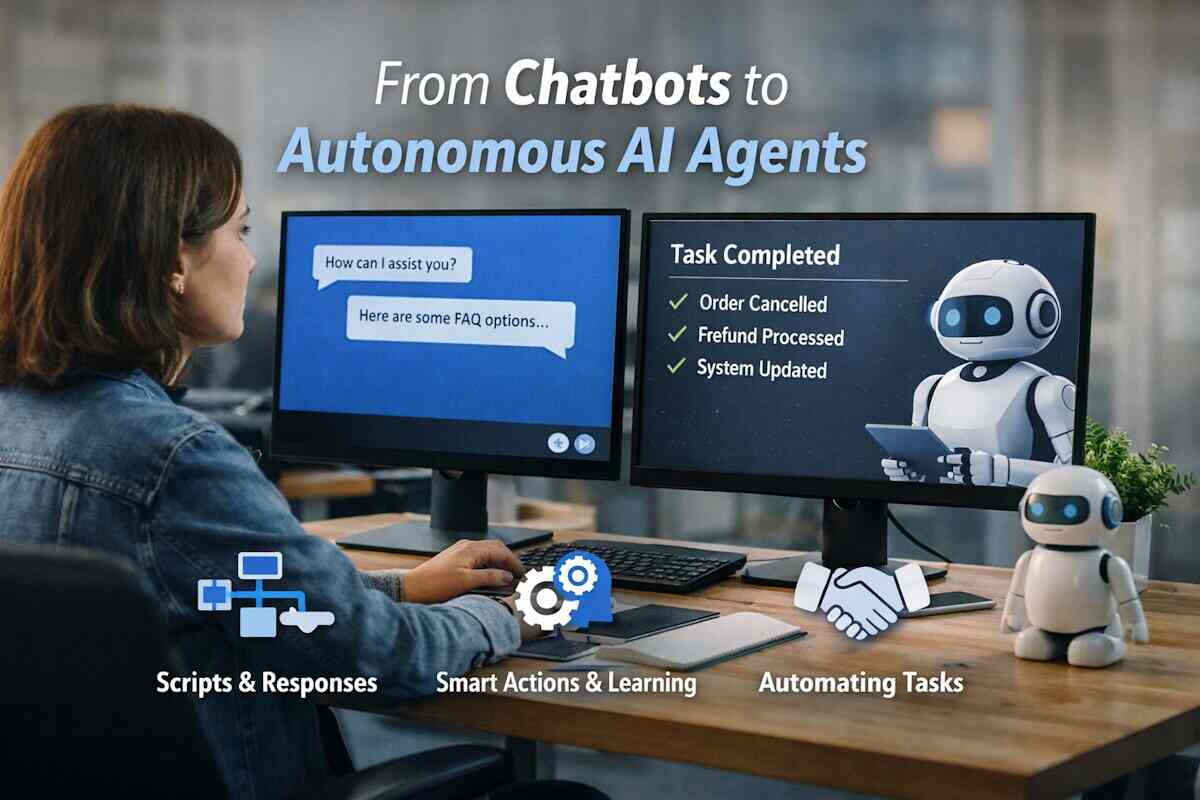
A chatbot sticks to a script. It’s like a flowchart—you ask X, it replies with Y. You go off script, it gets confused or resets the chat.
An autonomous agent, though? It’s smarter. It can handle tasks, make small decisions, learn from past interactions, and adapt its responses. Instead of just giving you information, it acts on your behalf. You’re not just getting answers—you’re getting stuff done.
Imagine contacting support to cancel an order. A chatbot might send you the policy. An autonomous agent could check the order status, verify eligibility, cancel it, update the system, and confirm with you. No human agent needed.
That’s a whole different level of helpful.
Why the Shift Is Happening Now
A few reasons are pushing this transition forward:
- Customers expect better: Nobody wants to repeat themselves three times or deal with clunky menus.
- Time is money: The more tasks your team automates, the more they can focus on higher-value work.
- Tech is more accessible: You don’t need to be Google or Amazon to build smart tools anymore. With the right ai development service, you can build solutions tailored to your business without breaking the bank.
And let’s not forget: when competitors are offering better, smoother experiences, you can’t afford to fall behind.
What Makes an Agent “Autonomous” Anyway?
It’s not about fancy buzzwords or some vague idea of “smart AI.” Here’s what autonomy really means in this space:
- Handles context: It knows what came before and what matters now. If a user references something from earlier, it connects the dots.
- Acts independently: It doesn’t just suggest—you can let it handle tasks on your behalf.
- Learns over time: The more it interacts, the sharper it gets.
- Connects across systems: It can pull info from your CRM, inventory, calendars, databases, and make decisions based on all that.
This isn’t science fiction. It’s real, working tech that businesses are putting in place right now.
Not Just for Support—Use Cases Are Everywhere
We tend to think of bots in customer support, but autonomous agents are being used way beyond that:
- Operations: Automating repetitive tasks across logistics, reporting, and inventory.
- Sales: Qualifying leads, booking meetings, reminding reps to follow up.
- Onboarding: Walking new customers or employees through setup, collecting documents, answering questions.
- IT and internal tools: Managing tickets, provisioning accounts, resetting access, even answering policy-related questions.
Anywhere your team is bogged down by manual, repeated tasks? That’s a chance to use an agent instead.
Why You Can’t Just Install a Bot and Call It a Day
Here’s the catch—these agents don’t just run out of the box. You’re not buying software, flipping a switch, and watching magic happen. You’re building a system that’s tied closely to your workflows, goals, and data.
That’s why companies turn to an AI development service instead of going DIY.
These service providers bring the technical skills and business understanding to actually build a solution that works. Not a generic tool. Not a “good enough” chatbot. A real agent that makes sense for your specific needs.
Whether it’s integrating with your systems or building logic that matches your operations, they make sure the tech fits your business—not the other way around.
Hiring Smarter Starts with Smarter Tools
Let’s talk hiring. If your HR team is still manually screening resumes or replying to candidate emails one by one, you’re wasting time.
An AI Hiring Platform changes that. It can rank applicants, answer questions automatically, schedule interviews, and give hiring managers better data to work with. It helps you move fast without sacrificing quality or fairness.
But what if your hiring process is unique? What if off-the-shelf platforms don’t quite match your workflows?
That’s where custom tools come in. You can work with a ai development service to build a platform that fits how you hire—not how someone else thinks you should.
Build or Buy? Sometimes You Just Need the Right People
Let’s say you’ve got a strong internal tech team, but you don’t have the experience needed to build out advanced AI tools. That’s common.
In that case, the best move might be to hire AI developers on a project basis. Bring in experts who’ve done it before. Skip the learning curve. Hit the ground running.
You can either hire freelancers, contract developers, or work with a firm that helps place AI talent quickly. The key is getting someone who understands both the tech and how to apply it practically.
No fluff. Just real skills, solving real problems.
Things to Watch For
Sure, this all sounds good—but it’s not magic. There are challenges:
- Data quality matters: If your system feeds bad data to an agent, the output will suffer.
- Maintenance never stops: These systems need tuning, updating, and monitoring.
- Privacy and security: You’ll need to stay compliant, especially if your agents handle personal or sensitive info.
- User experience: Just because something’s smart doesn’t mean people will enjoy using it. UX still matters.
That’s why working with experienced teams—whether a trusted ai development service or seasoned developers—is important. They know the common pitfalls and how to avoid them.
So, What Should You Actually Do Next?
Here’s a simple way to get started:
- Pick one pain point: Look for a process that’s annoying, repetitive, or slow.
- Talk to your team: Get input from the people doing the work. They’ll tell you what’s slowing them down.
- Explore solutions: Could a smart agent take this over? If yes, find the right dev team or partner to help.
- Start small: Don’t try to automate everything on day one. Build, test, improve.
This approach keeps things focused, manageable, and tied to real business needs—not buzzwords or hype.
Wrapping It Up
Chatbots got the ball rolling. But now it’s time to move forward. Smarter tools are out there. The kind that don’t just respond—but actually help.
Whether it’s through a tailored AI Hiring Platform, working with a trusted AI development service, or choosing to hire AI developers for your team, the tools to build autonomous agents are more accessible than ever.
The real question is: what would you rather have—another generic chatbot, or a smart assistant that actually makes work easier?
The move from chatbots to agents isn’t about staying trendy. It’s about making your business sharper, faster, and more useful for the people who depend on it.
