
Concrete vs Asphalt vs Pavers: How to Choose the Right Driveway for a Melbourne Property
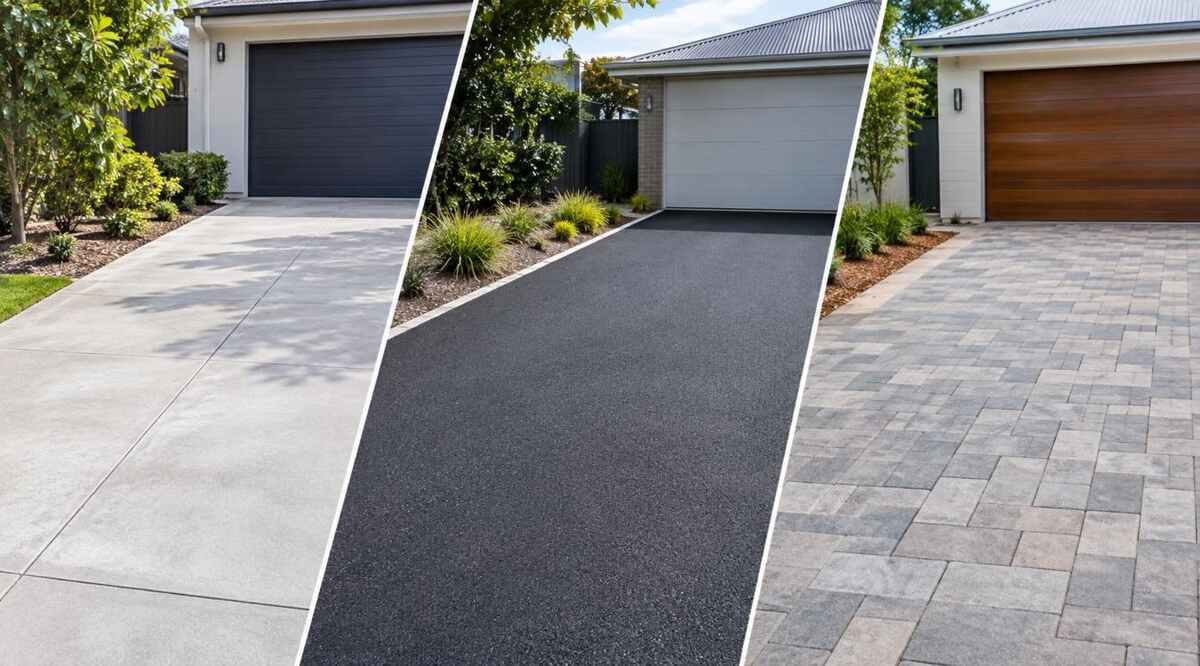
Quick Answer: Concrete suits many Melbourne homes and shared driveways where longevity and low maintenance matter. Asphalt suits large areas and tighter budgets, and goes down quickly. Pavers suit design-led residential driveways with light traffic. No material wins everywhere, because base preparation, drainage, soil, traffic load and council requirements decide how long any driveway lasts. Whichever you choose, a driveway contractor in Melbourne should inspect the site before quoting.
Many driveway failures in Melbourne start beneath the surface, not in the material itself. A well-built asphalt driveway will outlast a poorly built concrete one, and the reverse is also true. This guide compares the three most common options and what to ask before anyone starts digging.
Start With the Site, Not the Surface
Before comparing materials, look at what the driveway has to deal with:
- Soil: Reactive clay is common across parts of Melbourne, including areas of the north and west. It swells when wet and shrinks when dry, and it moves slabs and bases with it.
- Drainage: Water that sits on or under a driveway weakens the base, so falls and drains matter as much as the finish.
- Traffic: A driveway for two family cars is a different design case from one used by bin trucks, delivery vans or tradies’ utes.
- Heat: The Bureau of Meteorology recorded 45.6 °C at Laverton RAAF on 27 January 2026, the hottest reading across Greater Melbourne sites that summer. Surface temperatures run well above air temperature, which affects some materials more than others.
Concrete Driveway Construction: Strengths and Limits
Concrete driveway construction is a popular choice for Melbourne homes and shared properties, and for good reason.
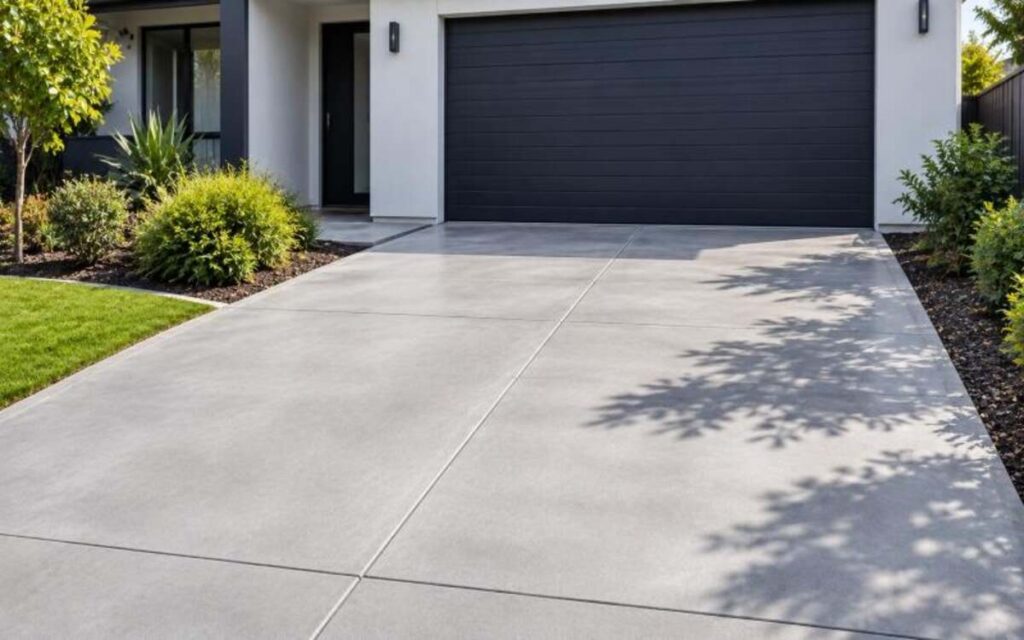
Strengths
- Handles heavy vehicles well when the thickness, strength grade and base suit the load
- Stays rigid in hot weather, so it does not rut or soften
- Wide range of finishes, including plain broom, exposed aggregate and coloured
- Often the longest-lasting option when built properly
Limits
- Higher upfront cost than asphalt for most jobs
- Needs control joints and a good base, or it is likely to crack
- Takes longer to cure before it can carry vehicles
- Patch repairs are visible
Councils give a useful benchmark for quality. The City of Monash’s vehicle crossing specification, for example, calls for a minimum 125 mm of concrete with a compressive strength of at least 32 MPa at 28 days, and keeps the crossover off-limits to traffic for at least 48 hours. Your council’s numbers may differ, but they show how seriously the base and cure are treated. See our concrete driveway construction service in Melbourne.
Asphalt Driveway Construction: Strengths and Limits
Asphalt driveway construction is popular for long driveways and larger areas because it is flexible, quick and cost-effective.
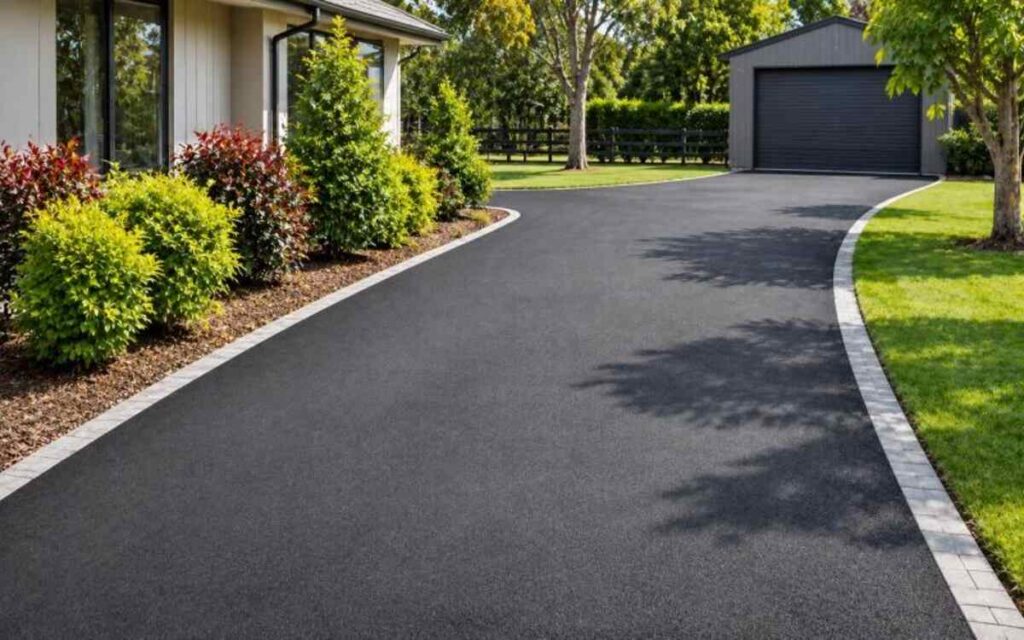
Strengths
- Usually less expensive to install than concrete or decorative paving
- Faster to lay and return to traffic
- Flexible surface that tolerates minor ground movement better than a rigid slab
- Easy to patch, overlay and re-mark
Limits
- Sensitive to heat. Austroads guidance for road pavements puts maximum surface temperature in Melbourne at about 21 °C above hot-day air temperature, so 40 °C air suggests a surface near 61 °C (a design estimate). At those temperatures, asphalt can soften, take tyre and kickstand marks, and rut under slow, heavy loads
- Needs edge support, or the edges can crumble
- Standard builds typically perform well for 10 to 15 years, and sealing and prompt crack repair help it reach the top of that range
Asphalt is a strong choice when the area is large, the budget is tight, or access needs to reopen fast. It is a weaker choice for a steep, sun-exposed driveway that carries heavy parked vehicles. Our asphalt driveway construction service covers both residential and commercial work.
Pavers: Where They Fit
Pavers offer the widest design choice, and single units can be replaced. They depend heavily on the base and edge restraint, and poorly laid pavers settle, shift and grow weeds in the joints.
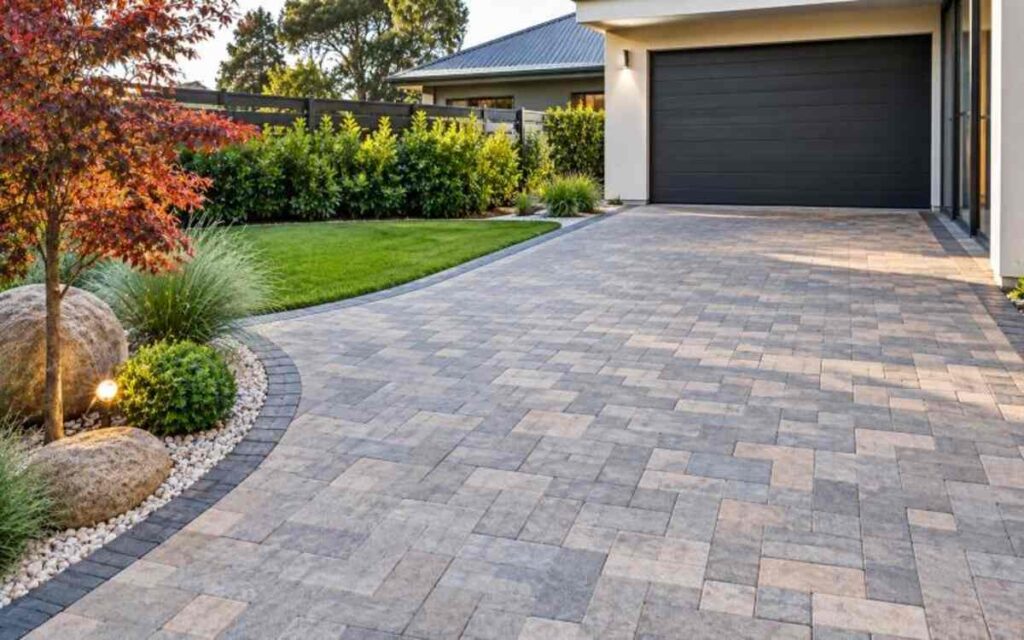
Permeable pavers deserve a note. Melbourne Water’s porous paving guidance says these systems reduce peak stormwater discharge and help recharge groundwater, but they can only support light traffic loads, are prone to clogging and suit only mildly sloped sites. Where the soil is impermeable, such as clay, the guidance adds subsoil drainage below the base. That makes them a good fit for a short residential drive and a poor fit for a busy or steep one.
Side-by-Side Comparison
| Factor | Concrete | Asphalt | Pavers |
| Upfront cost | Mid to high | Lowest of the three for most areas | Mid to high, labour-intensive |
| Lifespan | Often longest when well built | 10 to 15 years typical for standard builds | Long if base and edges hold |
| Hot weather | Rigid, does not soften | Can soften and mark | Handles heat well |
| Heavy vehicles | Strong with the right design | Good with a thick, well-compacted base | Weaker unless built to a heavy-duty design |
| Return to traffic | Slowest | Fastest | Fast once laid and compacted |
| Repairs | Visible patches | Easy patching and overlays | Lift and replace single units |
| Best suited to | Homes, shared and commercial driveways | Long or large driveways, budget-led jobs | Short, design-led residential drives |
Council Rules Apply Whatever You Choose
Where a driveway meets the road, the crossover runs over council-managed land, usually the nature strip and footpath. Councils often publish a crossover specification and require a permit before work starts. The City of Monash, for example, requires a Vehicle Crossing Permit for all vehicle crossover construction. Check your council’s requirements before you choose a material, because the crossover section may have to follow a set specification even if the rest of the driveway does not.
Five Questions to Ask a Driveway Contractor in Melbourne
A reliable driveway contractor in Melbourne will answer these without hesitation:
- What base depth and compaction do you propose, and why for this soil?
- How will the driveway drain, and where does the water go?
- What concrete thickness and strength grade, or asphalt mix and thickness, suit my traffic?
- Do you handle the council permit, and have you built crossovers in my council area?
- What does the warranty cover, and what maintenance does it assume?
Frequently Asked Questions
Is concrete or asphalt cheaper for a driveway in Melbourne?
Asphalt is usually cheaper to install, especially over larger areas. Concrete costs more upfront but can last longer, so the better value depends on your traffic, site and how long you plan to stay.
Which driveway material lasts longest?
Well-built concrete is often the longest-lasting option. Standard asphalt typically lasts 10 to 15 years. In every case, the base, drainage and maintenance decide the real lifespan.
Is asphalt a bad choice in Melbourne's summer heat?
Not necessarily. Asphalt can soften and mark in extreme heat, particularly in sun-exposed areas with heavy or slow-moving loads. A suitable mix, a good base and sealing reduce the risk. Concrete doesn’t soften the same way.
Do I need a council permit to build or replace a driveway in Melbourne?
Usually yes for the crossover, the section between your boundary and the road. Councils such as Monash require a Vehicle Crossing Permit for all crossing works. Check with your local council before you start work.
How long before I can drive on a new driveway?
Concrete takes longer to reopen. Monash’s crossing specification, for example, keeps new crossings off-limits to traffic for at least 48 hours. Asphalt generally reopens sooner once cooled. Your contractor should confirm timing based on your mix, thickness, and weather.
The Bottom Line
Choose concrete for longevity and heavy use, asphalt for larger areas, tighter budgets and speed, and pavers for design-led, light-traffic drives. Then spend your effort on what sits beneath the surface. A good base, correct falls and the right council approvals matter more than the material on top.


